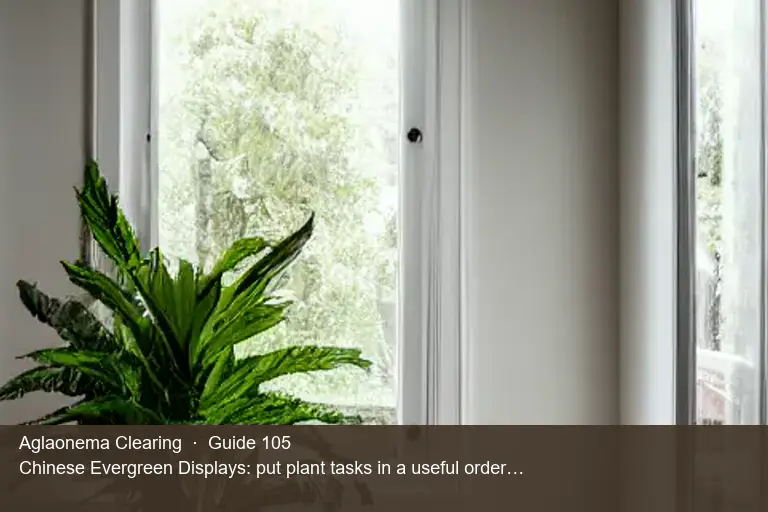
Chinese Evergreen Displays: put plant tasks in a useful order — reuse review for shared plant care; setup after a break
Chinese evergreen displays are a popular choice for indoor plants as they provide a natural and aesthetically pleasing backdrop. But with so many choices, it can be challenging to determine how to best utilize and care for your plants. In this article, we'll explore a practical strategy for organizing Chinese evergreen displays, ensuring that your plants are always in top condition while also minimizing the risk of overwatering or overfeeding. We'll also share a step-by-step guide on how to set up these displays after a break, making it easier to maintain your plants while giving them the rest they need.
The first step in organizing Chinese evergreen displays is to identify the most commonly used plants and their watering needs. This can be done by looking at the plants' size and shape, the type of soil, and the specific needs of each plant. For example, tall plants like potted palms, orchids, and ferns typically need less water than smaller plants like snake plants, snake trees, and cattails.
Once you've identified the most commonly used plants, you can start to categorize them into different groups. For example, you could group them into categories such as houseplants, houseplants, houseplants, and houseplants. This will make it easier to remember which plants are similar in size, shape, and soil needs.
The next step is to create a visual hierarchy for your plants. This involves arranging your plants in a way that makes sense for their needs and size. For example, you can place the largest plants first, followed by the medium plants, and then the smallest plants. This will help ensure that your plants are always in a suitable environment and can receive the right amount of water and nutrients.
To set up Chinese evergreen displays after a break, we recommend starting with a clean and tidy space. This will help ensure that your plants have a fresh start and are in a good condition for their next use. Next, we suggest grouping your plants into categories based on their needs and size.
Finally, we recommend giving your plants a rest after a break. This means allowing them to receive the appropriate amount of water and nutrients they need. For example, you can give your plants a break after each watering or fertilizing session, and then give them a break after each watering or fertilizing session.
By following these steps, you can keep your Chinese evergreen displays in top condition while also minimizing the risk of overwatering or overfeeding. This will make it easier to maintain your plants while giving them the rest they need.