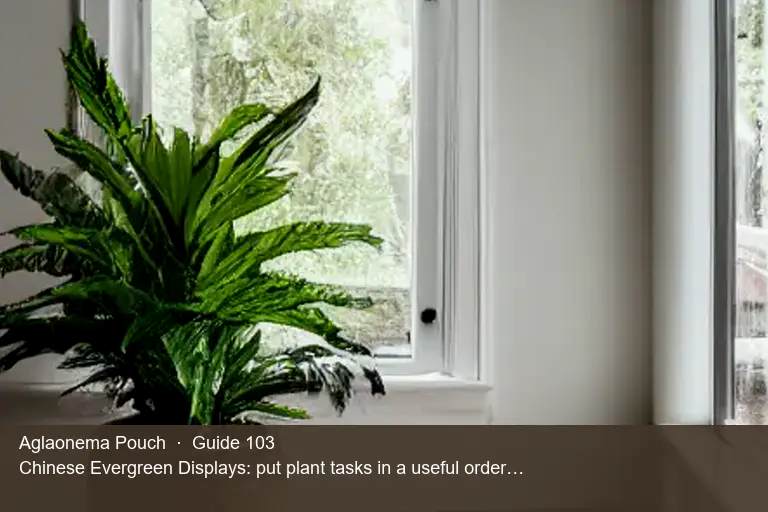
Chinese Evergreen Displays: put plant tasks in a useful order — consistency test for a compact growing area; setup in fifteen-minute sessions
Chinese evergreen displays are a versatile and environmentally friendly way to grow plants in a small space. By using these displays, you can control the environmental conditions that affect your plants, ensuring they receive the optimal growing conditions for their needs. The key to a successful Chinese evergreen display is to establish a consistent growing environment that ensures your plants receive the necessary amounts of light, water, and nutrients. This article will guide you through the process of setting up these displays in fifteen-minute sessions, ensuring that your plants are well cared for and grow healthily under the conditions you’ve set for them.
Step 1: Selecting the right plants for the display The first step in setting up a Chinese evergreen display is to choose the right plants. The most important factor is the type of plants you have available. You will need to consider the light, water, and nutrients each plant requires. For example, you may have plants that need more sunlight, while others may need more water. The best way to determine your plants' requirements is to research them online or ask a local nursery expert.
Step 2: Creating the proper growing conditions Once you have selected the right plants, the next step is to create the proper growing conditions for your plants. The key to creating the right environment is to ensure that the plants receive the necessary amounts of light, water, and nutrients. The best way to do this is to use a well-draining soil mixture that is suitable for the plants' needs. You may also want to use a plant fertilizer that is specifically designed for the plants you have available.
Step 3: Setting up the display Once the plants are in the proper growing conditions, the next step is to set up the display. This involves arranging the plants in a way that creates the proper growing conditions. The most important thing is to ensure that the plants are placed at the right height and angle. The angle of the display can also help control the amount of light that falls on the plants.
Step 4: Monitoring the display After setting up the display, the most important thing is to monitor the display to ensure that the plants are receiving the correct amount of light, water, and nutrients. The best way to do this is to regularly check the soil moisture levels and the water level of the plants. If the soil moisture levels are too high or the water level is too low, it may be necessary to adjust the display.
Step 5: Providing additional support To help keep the display in a good condition, you may need to provide additional support. This can include things like a plant stand, a water tray, or a watering can. The best way to do this is to arrange the plants in a way that creates the proper growing conditions. The plants may also need to be placed at the right height and angle, or the water level may need to be adjusted.
In conclusion, setting up a Chinese evergreen display can be a challenging but rewarding process. By following the steps outlined above, you can create a display that is well cared for and grows healthily under the conditions you’ve set for them. Remember to regularly check the display, provide additional support, and make adjustments as needed to ensure that your plants are receiving the correct amounts of light, water, and nutrients.